Who Is This For?
Best For:
Traditional worship, memorization, literary appreciation, those who value historic language, and readers wanting a Bible that connects them to centuries of English-speaking Christianity.
Not Ideal For:
New believers, children, ESL learners, or those seeking straightforward comprehension without needing to learn archaic vocabulary.
Strengths & Limitations
✓ Strengths of the KJV
- Majestic, influential literary style that has shaped English
- Extremely well-known with countless phrases in common use
- No copyright restrictions - completely public domain
- Trusted by traditional churches with 400+ years of use
- Vast study resources, commentaries, and concordances available
✗ Limitations to Consider
- Archaic 17th-century English difficult for modern readers
- Based on fewer and later manuscripts than modern translations
- Many words have changed meaning over 400 years
- Thee/thou pronouns unfamiliar to contemporary readers
- Some translation choices reflect 17th-century understanding
Overview
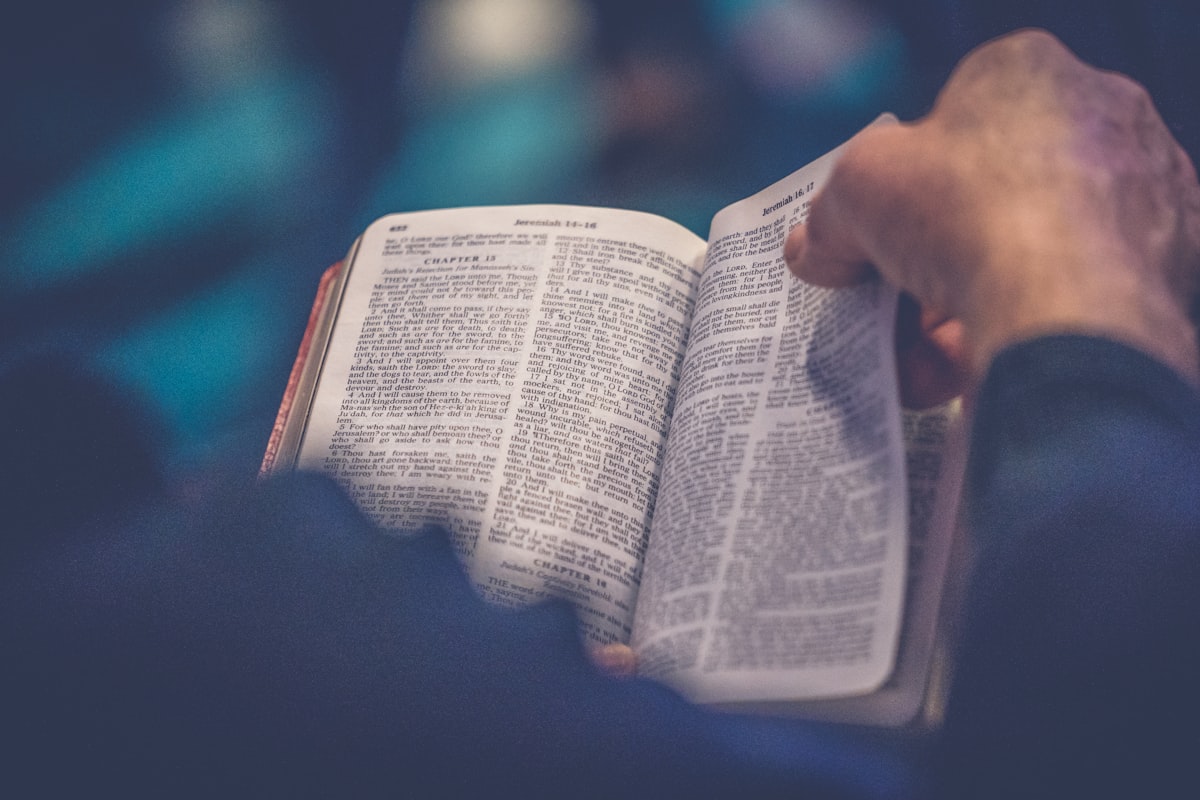
The King James Version, also known as the Authorized Version, stands as one of the most influential English translations ever produced. Commissioned by King James I of England in 1604 and completed by 47 scholars working in six committees at Westminster, Cambridge, and Oxford, this translation has shaped English literature, religious worship, and the English language itself for over 400 years.
Want to read the KJV Bible online? Use our Bible search tool to find any verse, or start reading from Genesis.
Notable Features of the KJV
- No copyright restrictions (public domain)
- Extensive study resources available
- Used formal/informal 'you' distinction (ye/thou)
- Poetic parallelism preserved from Hebrew
- Original 1611 included the Apocrypha
Frequently Asked Questions
What is the King James Version?
The King James Version, also known as the Authorized Version, stands as one of the most influential English translations ever produced. Commissioned by King James I of England in 1604 and completed by 47 scholars working in six committees at Westminster, Cambridge, and Oxford, this translation has shaped English literature, religious worship, and the English language itself for over 400 years.
How can I read the KJV Bible online?
You can read and search the King James Version online for free at Acts1 Family. Use our Bible search tool to find any verse, chapter, or keyword in the KJV translation.
When was the KJV Bible published?
The King James Version was first published in 1611. It is classified as a Formal Equivalence translation with a 12th Grade reading level.
Who should use the KJV Bible?
Traditional worship, memorization, literary appreciation, those who value historic language, and readers wanting a Bible that connects them to centuries of English-speaking Christianity.
How does the KJV compare to other Bible translations?
The King James Version (KJV) is a Formal Equivalence translation. Compare it with other versions like the KJV, ASV, or NIV using our Bible comparison tools to find the best translation for your needs.
Read the KJV Online
Search any verse, compare with other translations, or start reading from Genesis.
Start ReadingHistory
Complete History of the KJV Translation
The King James Version originated at the Hampton Court Conference in January 1604, where Puritan leader John Rainolds proposed a new translation to King James I. The king, who disliked the popular Geneva Bible's anti-monarchical marginal notes, enthusiastically supported the idea. By June 1604, James had approved a list of 54 scholars (47 of whom are known to have participated), divided into six companies working at Westminster, Cambridge, and Oxford.
The translators worked from 1604 to 1611, drawing heavily on William Tyndale's earlier work (scholars estimate 84% of the KJV New Testament and 76% of the Old Testament portions Tyndale translated came directly from his work). They also consulted the Bishops' Bible, the Geneva Bible, and original Hebrew and Greek texts. The complete Bible was published in 1611 by Robert Barker, the king's printer.
Despite its title page stating it was 'appointed to be read in churches,' no record exists of formal authorization by King, Parliament, or Convocation. The KJV initially faced competition from the Geneva Bible but gradually gained dominance, becoming the unchallenged English Bible by the Restoration of 1660. For over 250 years, it was virtually the only Bible used in English-speaking Protestant churches.
Learn More on Wikipedia
Translators
Meet the 4 Key Translators and Contributors
Lancelot Andrewes
Director of Westminster Company (Genesis-2 Kings)
Dean of Westminster, later Bishop of Winchester, renowned preacher and scholar fluent in 15 languages.
John Rainolds
Oxford Company leader
President of Corpus Christi College who originally proposed the translation at Hampton Court. Died in 1607 before completion.
Miles Smith
Final editor
Wrote the famous preface 'The Translators to the Reader' and supervised final editing with Thomas Bilson.
Thomas Bilson
Final editor
Bishop of Winchester who oversaw the final revision and approved the text for printing.
Textual Basis
Manuscript Sources and Translation Methodology
The KJV New Testament was translated from the Textus Receptus, a Greek text based primarily on Byzantine manuscripts compiled by Erasmus in the 16th century. The Old Testament was translated from the Masoretic Hebrew text, with reference to the Septuagint and Latin Vulgate. Modern scholars note the Textus Receptus was based on relatively few, late manuscripts compared to texts available today.
Reception
Scholarly Praise
"The King James Bible wedded the English language to the Christian faith in a way that has never been broken, despite all the challenges of a post-Christian era."
— Alister McGrath, In the Beginning: The Story of the King James Bible (2001) [source]
"No other book has contributed so many words and phrases to the English language as the King James Bible—nearly 260 distinct idioms entered common usage."
— David Crystal, Begat: The King James Bible and the English Language (2010) [source]
"The translation's genius lay in committee work: 54 men arguing over every phrase created a richness of meaning no single author could achieve."
— Adam Nicolson, God's Secretaries: The Making of the King James Bible (2003) [source]
Scholarly Concerns
The KJV includes passages like the Comma Johanneum (1 John 5:7-8) and the long ending of Mark despite weak manuscript support, and Matthew 23:24 contains a documented translation error ('strain at a gnat' should be 'strain out').
— Daniel B. Wallace, Why I Do Not Think the King James Bible Is the Best Translation Available Today (2004) [source]
Many words have changed meaning since 1611: 'prevent' meant 'precede,' 'let' meant 'hinder,' and 'conversation' meant 'conduct'—creating significant comprehension barriers.
— Michael Rydelnik, The King James Version Controversy (2019) [source]
Revision History
View 4 Major Revisions and Updates
- 1629 First Cambridge revision correcting printing errors. Some original translators were still alive to participate.
- 1638 Second Cambridge revision with over 200 corrections, completing about 72% of all textual corrections.
- 1762 Thomas Paris at Cambridge standardized spelling and punctuation, made minor textual changes.
- 1769 Benjamin Blayney's Oxford edition became the standard text still used today. Updated spelling, added italics, corrected errors.
Compare Translations
See how the KJV compares to other English Bible translations.
Other Translations
Explore these popular Bible translations: